




News
How AI is Changing the Refurbished Laptop Industry
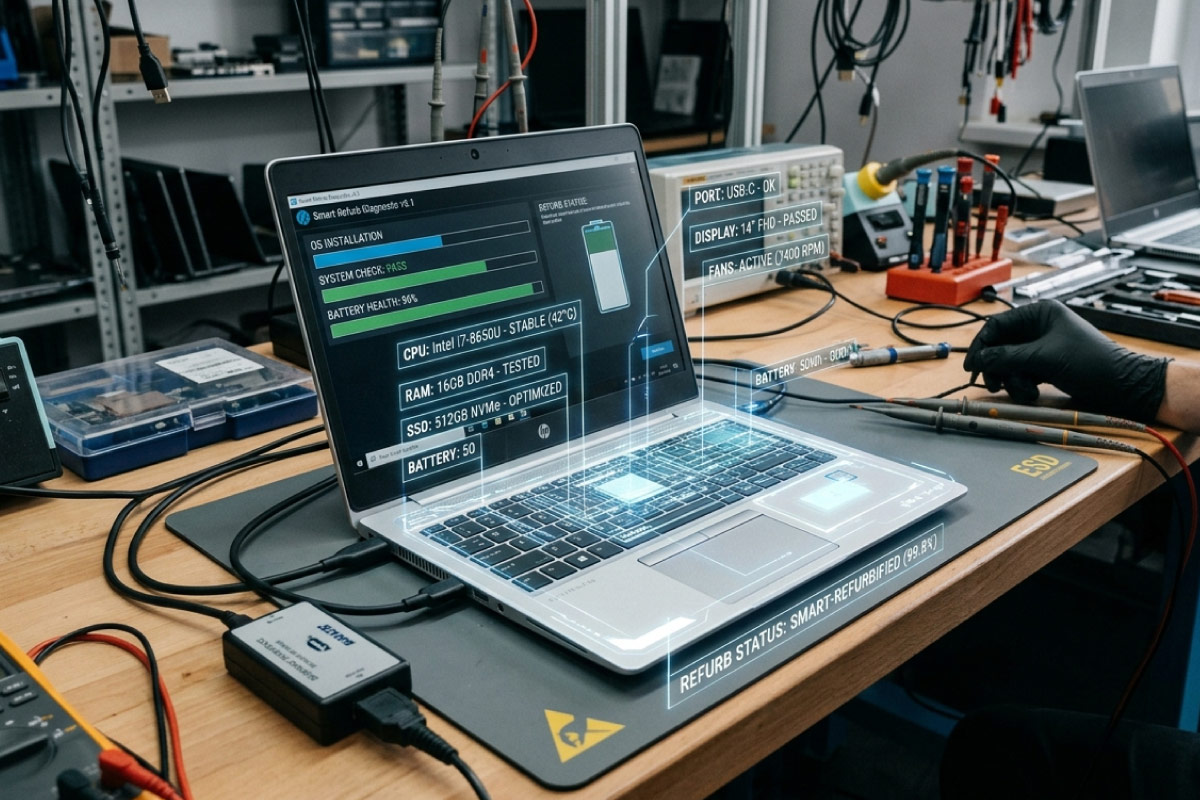
AI has quietly changed how refurbished laptops get graded, priced and tested, and most of that work happens long before a machine reaches a customer. For buyers in South Africa the practical result is simple: descriptions are more accurate, pricing moves faster, and a five-year-old business laptop is now expected to run software that did not exist when it left the factory.
Quick answer: AI mainly affects the refurbished trade behind the scenes, through automated diagnostics, pricing and grading. For the buyer, it shows up as better-described stock and as more demand for 8GB or 16GB of RAM.
Key takeaways
- Automated diagnostics test battery health, storage wear and component identity far faster than a technician can by hand.
- Pricing on used hardware now tracks live market data rather than a fixed markup, which is why prices move week to week.
- Running AI features locally is mostly a memory question, not a processor question. RAM is the upgrade that matters.
- Most AI tools people actually use run in the browser, so an 8th-generation Core i5 handles them without complaint.
- Every machine we ship is tested by hand as well, with genuine Windows 11 Pro, a one-year warranty and 7-day returns.
Where AI actually sits in the refurbishment process
The unglamorous parts have changed most. Automated test suites now read SMART data off a drive, log battery cycle counts, check every port, identify the exact CPU and memory configuration and flag dead pixels, all in one pass. What used to be a technician working through a checklist is now a report generated in minutes and checked by a person.
That matters to a buyer for one reason. When a listing says a machine has an i5-8365U, 8GB of RAM and a 256GB SSD, that came off a diagnostic report rather than someone’s memory of what was in the box.
Grading is getting more consistent
Cosmetic grading has always been the soft spot in this industry, because one shop’s Grade B is another’s Grade A. Image recognition tools that score scratches, dents and lid wear are pushing that towards something repeatable.
We still do the final call by eye, because a photo does not tell you how a hinge feels or whether a keyboard has a sticky key. But the letters mean more than they did five years ago. If you are unsure how much a grade should influence your budget, our guide to A, B and C grades covers where the money is genuinely worth spending.
Why used prices move more than they used to
Pricing on refurbished stock used to be a rule of thumb. Now it responds to supply, to what similar machines are selling for, and to the pace at which corporates release fleets. A Lenovo ThinkPad T490 with a Core i5-8365U is one of the most common machines in our refurbished laptop stock, and it sits anywhere from R5,050 to R6,050 depending on grade and whether it has a touchscreen. That figure genuinely shifts as batches land.
The buyer’s takeaway is not complicated. If a model you want is in stock at a price you are happy with, that price is a snapshot rather than a fixture.
What AI means for the machine you are buying
There is a lot of noise about needing a new “AI PC” with a neural processing unit. For the tools most people use, that is not the case. ChatGPT, Claude, Copilot in the browser, Canva and the AI features inside Microsoft 365 all run on someone else’s servers. Your laptop is displaying the result.
What does strain an older machine is having twenty browser tabs open next to Teams and Excel. That is a memory problem. An 8GB stick of DDR4 costs about R600, and taking a business laptop from 8GB to 16GB does more for daily responsiveness than any processor upgrade in this price band.
Tip: if you want to run models locally rather than in the browser, plan for 16GB as a minimum and check that the machine has a free memory slot before you buy.
Which refurbished machines make sense for AI-era work
The sensible floor is an 8th-generation Intel processor, 8GB of RAM with room to double it, and an SSD. That specification also keeps you inside Microsoft’s hardware requirements, which matters now that Windows 10 support has ended. We covered the compatibility side in detail in our piece on refurbished laptops that run Windows 11.
- Everyday office and study work: a Core i5 ultrabook such as an HP EliteBook 840 G5 or G6, from about R4,150 in Grade C.
- Heavier multitasking: the same chassis with 16GB fitted, or a Core i7 model.
- Desk-bound users: a refurbished tower or small form factor PC, which gives you more memory slots and a bigger screen for less money than a laptop.
Our Core i5 laptop stock is where most SMEs and students land, and the desktop range is worth comparing if the machine never leaves an office. If you have settled on a brand, the HP business range tends to have the deepest stock of the three.
Getting more out of a machine you already own
Not every answer is a new purchase. Plenty of older laptops become useful again with an SSD, a memory upgrade and a clean Windows install. A 256GB M.2 SSD is around R450 and transforms a machine still running a mechanical drive. We put together a list of AI tools that run well on older hardware for exactly this situation.
Frequently asked questions
Do I need an AI PC with an NPU?
For browser-based tools, no. Neural processing units help with on-device features like local transcription and background effects in video calls. If your AI use is ChatGPT, Copilot or Gemini in a browser tab, a well-specced refurbished business laptop does the job.
How much RAM do I need to run AI tools comfortably?
8GB is workable for browser-based tools. 16GB is the right target if you keep many tabs open, use Teams alongside Office, or want to experiment with models running locally.
Are AI-tested refurbished laptops more reliable?
Automated testing catches things a rushed manual check misses, particularly battery wear and drive health. It is one part of the picture. Warranty and returns still matter, which is why we back every machine with a one-year warranty and a 7-day return window.
Will a 2018 business laptop still be useful in a few years?
For office work, study and browsing, yes. Machines from that era support Windows 11, take modern SSDs and RAM, and were built to a standard that consumer laptops of the same price never matched.
The honest summary is that AI has made this trade more precise rather than more expensive. Testing is thorough, descriptions are accurate and pricing reflects the real market. For the person buying, the decision has barely changed: pick a machine with enough memory and an SSD, buy from somewhere that stands behind it, and spend the difference on something else.